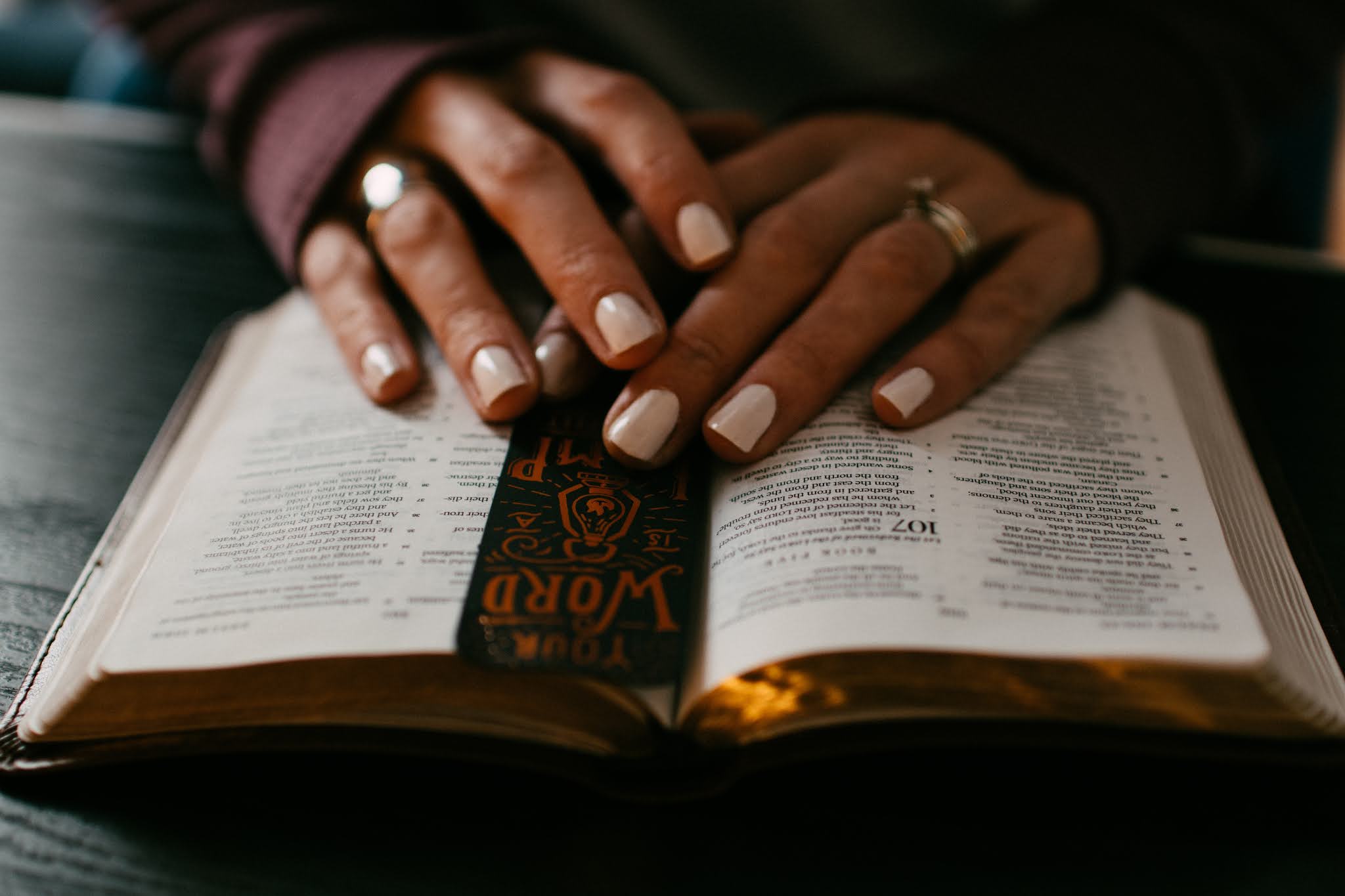
What are we doing when we gather for worship on Sunday? The hymns, the readings, prayers, sermon, and Eucharist. What do they amount to? The simple answer is this: to give glory to God. We meet to worship God, to give thanks, and to express our love and our devotion to the one who loved us first and to a degree beyond our wildest imagining. Indeed the origin of the word worship means worthy of honour.
Friday, 7 May 2021
on worshiping well
Friday, 30 April 2021
on the existence of God
Earlier this month, the Swiss theologian Hans Küng died. He was a giant in the world of academic theology and the enormous size of the books he produced was matched only by his reputation, not just in his native Roman Catholic Church, with whom he had a sometimes difficult relationship, but across Christian traditions.
The question of God’s existence can neither be proven nor disproven. This is what makes the arguments between people of faith and ‘New Atheists’ so futile. For Christians, however, our belief in God comes partly from a choice we’ve made as followers of Jesus, and partly from the tradition handed down to us. But the main evidence comes from the transformation of our inner life through spiritual practice. In discovering prayerful union with God, we encounter love, peace and fullness of life that nothing else in this world can touch.
Friday, 23 April 2021
on reading the bible aloud
Friday, 2 April 2021
on placing hope in things unseen
Faith is the assurance of things hoped for, the conviction of things not seen (Hebrews 11:1).

Friday, 26 March 2021
on protest
Not everyone is comfortable participating in public protests or demonstrations. Perhaps it doesn't feel polite, turning up as a mob to chant and make one's voice heard on an important issue of the day. Or maybe we don't like the kind of people demonstrations sometimes attract. Or we might feel we're not the protesting type; unsure if it will actually change anything. Or possibly we just don’t like crowds. And yet there are time when we must make our voice heard and stand up for what is right.
Jesus’ entry into Jerusalem on a donkey, with the crowds shouting 'hosanna' and paving his way with palms, was a form of protest. It was a parody of the Roman military processions of the time designed to remind people of their power and strength. Jesus’ procession was a demonstration of a different type of reign, an indicator that Jesus’ kingship is based not on power, but on love, self-sacrifice and care for the poor.
photo: Radio Veritas Asi
Friday, 19 March 2021
on praying the stations of the cross
What does it mean to follow Jesus?
This is the question at the heart of every Christian’s experience. We each seek, in our own way, to follow his teaching and example in our life so that we, in turn, become more like him. Through prayer and devotions we invite Jesus to inhabit our inner selves, to feel closer to him and to his leading in our life. When we read a gospel passage, we might think about which character we most identify with and imagine how they felt after their encounter with Jesus.
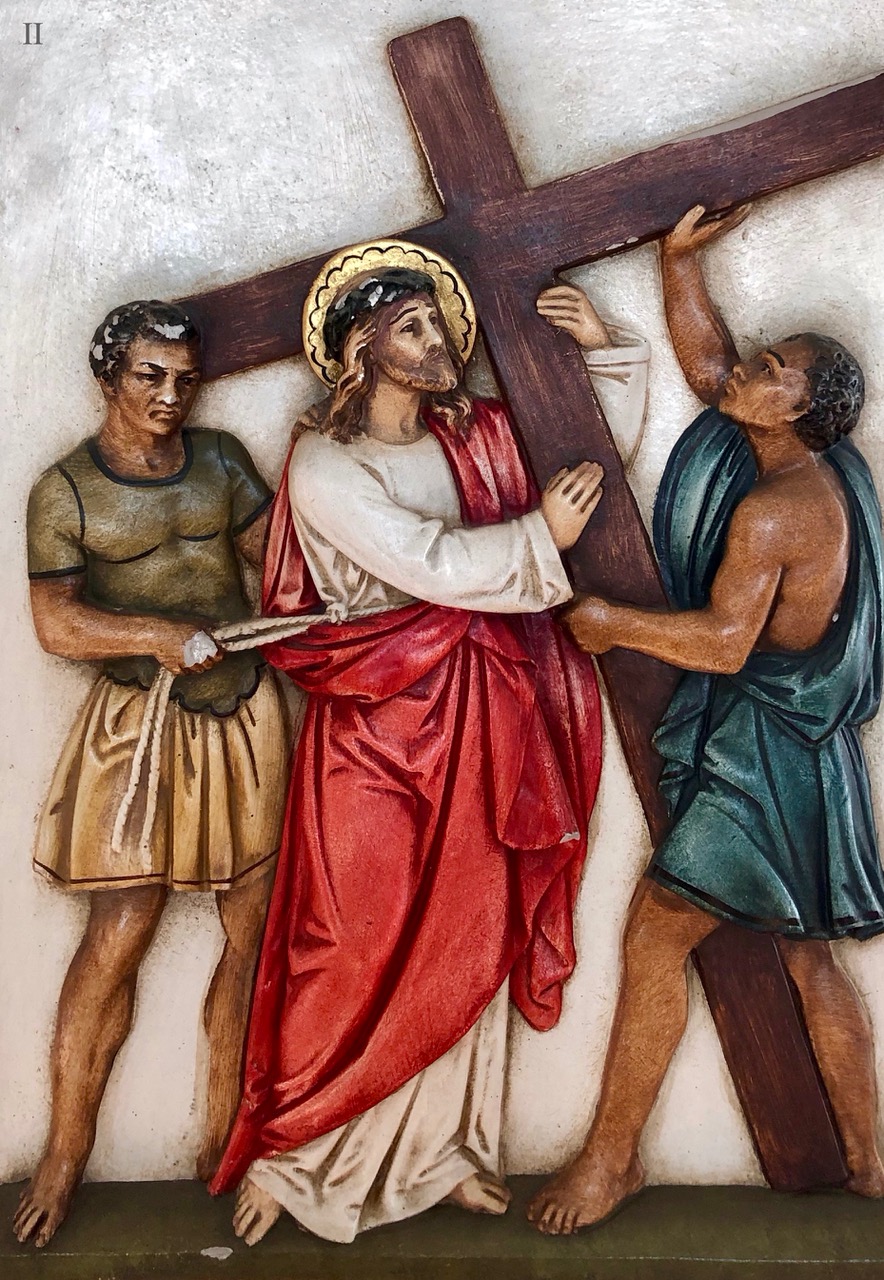
During Passiontide (the fortnight before Easter) we use another way of following Jesus, Stations of the Cross. The fourteen images of Jesus’ passion on the walls of St Anne’s, allow us to take a prayer pilgrimage with Jesus on his journey to crucifixion. It’s a sombre and sorrowful journey, as we set ourselves alongside Jesus in the suffering he undergoes. As we do so, we pray for those who suffer in our world today. We reflect on the examples of kindness shown to Jesus by courageous people during his trials. The Stations of the Cross enable us to profoundly experience the lengths to which God is prepared to go, to show us how loved we are. In turn, they inspire us to give of ourselves in love to others.This year, because of the pandemic, we cannot be in church to journey the stations, but we can pray them at home. We've set up a special page on St Anne's website where you can download the images and a series of reflections. You might wish to read and consider one station a day in the fortnight before Easter, or read them in chunks, or give an hour of your time to slowly reading and praying them all in one sitting. I pray they will be a blessing and bring you closer to the love of Jesus this Passiontide.
Friday, 12 March 2021
on feeling far from God
What do we do when we feel far from God? There are always times in life when it’s hard to pray, or open our Bible, or work up the enthusiasm for church. These might be described as desert experiences where life feels dry, dull, or devoid of richness. Just as life has its ups and downs, so too does our faith.
The season of Lent mirrors the 40 days Jesus spent in the wilderness: a trying time indeed. No scriptures to hand. No synagogue or temple to worship in. No home comforts, nor even any certainty where his next meal would come from. And 40 days is a long time.
I find by the time we get to this stage of Lent it's becoming somewhat trying. All those good intentions I began with – my Lenten fast, that book I said I’d read, daily rhythms of prayer – all begin to come under pressure. And there's that little voice in my head that says, ‘Well, it doesn’t really matter, does it?’ Where does that come from? It's precisely the same voice that tried to tempt our Lord away from his purpose on his desert retreat.
What can we do in such circumstances? Keep going! The devotional life rests on structure and discipline. It won’t feel rewarding every day, but our commitment to showing up for God will always bear fruit. Maybe not today. But one day soon where, instead of hearing the tempter’s voice, it's the still small voice of God speaking to us.
Make sure you don’t miss it.
Photo by Kelly Sikkema on Unsplash
Friday, 5 March 2021
on making friends with time
Mark Rothko, an American artist who died in 1970, has a special room to house his paintings at Tate Modern. His canvases are large and abstract, and seemingly very simple. The patterns are plain, the colours all rather similar and muted. If you saw one elsewhere in the gallery, hanging between the work of other ‘shoutier’ artists, you might not give them a second look. But in the Tate’s low-ceilinged Rothko Room, nine paintings hanging together in dim light, these works command your attention. The room is hushed, almost chapel-like, with benches to sit on while you contemplate these works. In such a setting, with no other distractions, the paintings come to life. As I discovered last time I visited, when you attend to them fully, they start to hum and pulse with a mystical energy. They almost become three-dimensional.
Sister Wendy Beckett, who was an art historian as well as a nun, said that the beauty of some paintings, as with so much in life, is only revealed in time. “Silence is making-friends-with-time,” she wrote. “Silence floats free with time, letting the patterns of the moments unfold at its own pace. It is a way of becoming free, not only for the practical advantage of being able to ‘see’ the beauty in what is grey, for example, but at a far deeper level. In silence we break the hold time has on us, and accept our true home is in eternity.”
Lent is a season for stillness and for discovering God in the ordinary. When we give our attention to God, freed from other distractions, then we will encounter the pulse of life in our relationship with God. As the psalmist wrote, “Let awe restrain you from sin; while you rest, meditate in silence.” (Psalm 4:4 REB)
Friday, 19 February 2021
on keeping spiritually fit
One of the symptoms of ‘Long COVID’ that I’ve been learning to live with is a weakened left arm. The muscles ache when required to do the slightest thing, such as holding a cup of coffee. So I’ve been trying some weight-lifting exercises to build it up. It will come as absolutely no surprise to anyone that training weights are not something we possess in the vicarage, so I’ve had to improvise. The best thing I’ve found is a nice big heavy King James Bible. With my arm stretched out and the Bible balanced on the palm of my hand I raise and lower it a few times. Then I swing it a few times as if I was throwing a frisbee.
Some might think this a frivolous use of a Bible, but the scriptures are all about exercise. Our daily devotions are a spiritual exercise that build up the muscle of our soul, better enabling us to live prayerfully and in tune with God. Breathing in the gospel each day helps us to breathe out the love of Jesus to those around us, and to grow more like him.
Like people who join a gym but seldom go, even although they know it is good for them, it is easy to get out of the habit of daily prayer and Bible reading. That’s what’s great about this season of Lent we find ourselves in. It’s an opportunity to redouble our efforts, set aside distractions, and focus anew on taking time alone with God each day.
Friday, 12 February 2021
on lent in lockdown
This week sees the start of Lent: a penitential season where we devote ourselves to the three-fold practice of prayer, fasting and almsgiving. It's a welcome opportunity to recover a more simple way of living and, freed from the clutter of modern life, to discover that God — in the words of theologian Paul Tillich — is the ground of our being.
After nearly a year of lockdown, shielding and social-distancing you may feel you have had enough of the simple life, and who could blame you? Yet I'd like to encourage you to embrace Lent, and to see our current circumstances as giving us a head start in really devoting ourselves to it. As St Anne's we will support your Lent observance in a number of ways.
On Ash Wednesday (17th) the church will be open for private prayer from Noon to 1pm, where you will be able to ash yourself using a simple liturgy. We're also going to be making use of the Church of England's Lent book, God's Story, Our Story. If you receive this news sheet by post, then you will find a copy enclosed. For those reading this via email and WhatsApp, you can request a copy from the parish office. For each day in Lent the book provides a short Bible reading, reflection and prayer. We will also be featuring readings from the book in our weekday prayers online. And later in Lent, we'll be offering you a variety of ways to pray the Stations of the Cross.
Our Lent appeal this year aims to help us keep the story being told at St Anne's, and we're asking you to make a special contribution to church funds which have been severely impacted by the pandemic. You can donate online at stanneandallsaints.org.uk/give, or post a cheque payable to 'St Anne and All Saints PCC' to Norman Campbell (SB pls complete).
I wish you a very blessed and holy Lenten season, and will be continuing to pray for you throughout.
Friday, 5 February 2021
on living in ordinary time
This week in the Church calendar we entered ‘Ordinary Time,’ the name given to those periods of the year when we aren’t marking a season such as Advent, Lent or Eastertide. Candlemas last week marked the end of 40 days of Christmastide, which includes Epiphany. On 17 February we will mark the beginning of Lent, so this spell of Ordinary Time is rather short. We will have several more months of it after Trinity Sunday later in the year.
The seasons of the Church calendar help us to give an intentional focus to aspects of the life of Jesus - his birth (Christmas), revelation (Epiphany), trials in the wilderness (Lent), passion and crucifixion (Holy Week), resurrection (Easter). These times give us a structure to journey with Jesus through his life and ministry. It also gives us some notable feast days and holidays (originally the word for holiday was ‘Holy Day’).
Ordinary Time is rather different. There is nothing distinctive about it. It is marked by neither fasting nor feast days. It’s a time for the day-in day-out business of life and following Jesus. This last year, however, it feels like we’ve been living a lot more Ordinary Time than usual, as lockdown and restrictions have inhibited our worship together and daily life has been stripped of many of the things which enrich us. But Ordinary Time has its own purpose, for life is made up of the ordinary: those day-to-day routines and chores. And when we care to attend to them we will see that they are shot through with their own moments of grace. Whether in lockdown or Ordinary Time, these are the days given to us to practice noticing the presence of God.
Friday, 29 January 2021
on seeing church through the eyes of a five-year old
One of the things I miss during lockdown are class visits from primary schools. Often we’ll have 60 fidgeting five-year olds squashed into the pews, wide-eyed and excited by a trip out of class. Vanessa and I talk to them about what they can see. They’re always curious about the old pulpit, the brass eagle lectern and that strange machine in the corner with all the tubes sticking out of it.
We burn some incense, which provokes a lot of theatrical coughing, and explain how smelly congregations used to be in the old days and that incense was a way of sweetening the atmosphere. We show them the churchwardens staves, not much used these days, but historically used to keep order in church or prod awake the odd snoozing parishioner during the sermon — a practice I’m all for reviving! We’ll gather around the font to talk about baptism, pouring water while we do so. And then we sprinkle them, to much uproar and a lot of delighted squeals.
And we’ll talk about candles, which are lit before their arrival. We explain how necessary they were in the days before electric light. Many churches kept them afterwards, not just because they’re pretty, but to remind us of something important about Jesus, the light of the world, who leads us through life’s dark patches and shows us the way to live. Or as the old man Simeon in the temple put it when presented with the Christ child, “A light for revelation to the Gentiles and for glory to your people Israel” (Luke 2.32). Happy Candlemas.
Monday, 18 January 2021
on how to be an ex-president
I am writing this just before the inauguration of a new American president, in which Joe Biden will be sworn in as the new incumbent of the White House. I’m praying that day will pass smoothly. Some of the nations’s former presidents will be on-hand to witness the ceremony. However the oldest living ex-president will be absent.
Friday, 15 January 2021
on feeling weary
Doing nothing can be so exhausting! There’s a real weariness that can arise from life in lockdown, a slow seeping away of the energy needed to find constructive things to do. Even those who have not been ill with Covid-19 are finding that it can be hard to sustain concentration on anything for long. And without being able to gather together with others, so many of the things in life that are stimulating or enriching are currently out of reach.
The one thing we can do - indeed must do - is take care of ourselves. A nun, who has spent her life in the lockdown of a cloistered religious life, advises that having a daily routine is key. Creating a structure for the day, a timetable even, where getting up, eating, exercising, prayer, work and leisure all have their rhythm. I’ve been using the opportunity to phone up old friends and have a good long chat, something I realise I used to do a lot more before the days of email, texting and social media. It’s crucial not to become isolated.
The Irish poet and priest, John O’Donohue (1956-2008) wrote a blessing for one who is exhausted, which includes these words:
You have been forced to enter empty time.
The desire that drove you has relinquished.
There is nothing else to do now but rest
And patiently learn to receive the self
You have forsaken for the race of days...
Gradually, you will return to yourself,
Having learned a new respect for your heart
And the joy that dwells far within slow time.
Friday, 8 January 2021
on taking stock of our lives
The start of a new year often prompts us to reflect on our lives and consider what changes we might want to make. New Year resolutions, as with Lenten fasts, often focus on what we might give up. It’s a boom time for the diet industry as people focus on losing some weight; it’s a less good month for the drinks industry as many observe ‘Dry January’ to give their livers a rest after indulging at Christmas. (I was doing fine until John handed me a glass of wine on New Year’s Day…)
Such opportunities for reflection are woven into Christian practice. We do this, for example, in the prayer of confession we say at the start of the Eucharist, offering up those moments in the week where we perhaps didn’t show our best selves to the world, asking God to help us do better. We can also say these prayers on behalf of the world — making our confession for the destruction of God’s creation, or the suffering that humanity inflicts.
Taking time to reflect at the end of each day is a long-established Christian practice. St Ignatius encouraged Christians to undertake a daily ‘Examen’, not only calling to minds the part of the day that went wrong for us (‘desolation’) but also offering thanksgiving to God for those moments in the day we are thankful for (‘consolation’). Take a moment to still yourself and open up to God’s presence, and ask: Where did I see God’s presence today? What am I thankful for? What feelings did I have today (positive and negative)? What should I pray for? How do I feel about tomorrow? You can read more about how to use these questions in your prayer time at: www.chrisgribble.com/the-daily-examen-five-key-questions/
Friday, 1 January 2021
on being ready for the unexpected
Happy New Year! I wish you every blessing for 2021. If last year taught us anything it is that the unexpected is always around the corner, so I will refrain from making any predictions about what lies in store for us. Whatever it brings, we must ensure we are in a state of spiritual readiness to respond to whatever life brings.
Jesus told his followers a parable to illustrate this point (Matthew 25.1-13). The bridesmaids at a wedding were due to greet the bridegroom at night. Each bridesmaid carried an oil-burning lamp so they could see in the dark. However, not all of them had brought spare oil with them, and their lamps went out. While they were away buying new oil, the bridegroom arrived and the prepared bridesmaids went into the banquet with him. When the others arrived, their lamps replenished, it was too late and the door was locked.
For us as Christians, keeping on top of our devotional life helps us to be alert to what God requires of us. The mission of the church has been described as ‘seeing what God is up to in the world and joining in.’ Only when we stayed tuned into God through daily prayer can we discern that. When we do, we also discover greater inner resilience and resources to deal with the unexpected. Whatever 2021 brings, I pray it will a year in which you can deepen your walk with God.
Friday, 25 December 2020
on keeping it real
One of the things I like about Mark’s gospel — which some of us have been reading during Advent — and what I like about it is that many of the people featured are either a bit bonkers or something of a letdown.
Well, there’s humanity right there in a nutshell.
If you still believe that you are the normal one then I’m sorry to disabuse you of that notion. Really. We’re all a bit cranky, egotistical, judgemental, eccentric, grumpy, obsessed with the wrong things, inattentive to the right things, snobbish, arrogant or generally potty! And that’s okay.
I’m not suggesting all of us are all of these things, but all of us are a mix of some of them. What we aren’t is normal. The good news is that God loves us just as we are, utterly and completely. The bad news is that we can’t encounter that love fully while we’re still pretending we’re better than others. The devotional life we aspire to is one where we accept our individual peculiarities. And when we do that, it’s a wee bit easier to accept everybody else’s weirdness.
When St Paul wrote that ‘all have sinned and fall short of the glory of God’, as he does in Romans 3, he doesn’t mean we’ve all done some naughty things that we should feel embarrassed about (that goes without saying). No, it goes much deeper than that, and means coming to terms with our own self-righteousness that makes us believe we’re better than others. It’s pretending you’re the normal one when others aren’t that’s the real sin.
The good news is that Jesus Christ is a great leveller. So when we stop getting all hoity-toity about other people, and start embracing and learning to understand our own peculiarities then we can more fully discover that scandalous love of God that takes us as we are. That’s what grace means.
The process of faith, of deepening our spirituality, begins with the phrase ‘know thyself.’ Not as you’d like to think of yourself, but the you you really are. That’s what humility is. Being able to recognise and admit to yourself: I’m a bit fearful at times. Or I feel a bit inadequate compared to others, so I behave oddly or speak harshly about them to make myself feel better. I struggle to recognise that I’m not actually better than others, because… well, just look at them… but also because pointing the finger is so much easier than the work of self-examination. I feel insecure. I’m shy. I don’t have very much patience with other people. I need to be admired or have opportunities to show off, in order to feel better about myself. I’d rather avoid people who are different from me because I can’t be bothered learning to understand their culture, their values, their customs because I worry it’ll take something away from me. (It won’t). I can’t cope with the speed that society is changing. I so dislike change that I’ll do what I can to control other people or situations I find myself in.
The great thing about the salvation that Jesus offers is that, while we’re undertaking the business of discovering and accepting our own particular peculiarities, we have absolutely no need to feel rubbish about ourselves. We’re loved by God just as we are. Jesus simply wants to lead us into a deeper loving union with God.
So while we’re letting go of our pretences about ourselves (which can feel scary, and sometimes be challenging) we can also let go of our hang-ups. Because God will hold onto us, and support us, when we allow the Holy Spirit to work in us and form us into new people.
That isn’t a process that happens overnight. It’s a lifetime’s work, rooted in a practice of daily prayer and devotions that invites Christ to lead us into wholeness.
I think Mary, the mother of Jesus, only a girl really, understood this. She seemed so tuned into God’s wavelength and had sufficient self-insight to attend to the work of God in her life, and the extraordinary announcement of the baby she was about to have.
How can you be sure that God accepts the weird and peculiar you that you are? Because he took on the weirdness of humanity in this little Christ child we celebrate today. God loves us in all our diversity and peculiarity and wrong-headedness and self-delusion — loves us enough to think — yeah, I’ll have a bit of that. I’ll enter right into that whole experience so they’ll know I’m totally with them. That I’m alongside them in all they’re going through. That if they’ll listen to me they’ll understand they could become so much fulfilled than they are, experience a much richer interior life, and they’ll know that I take them as they are because I’ve been there, done that and I’ve got the scars to prove it.
For unto us a child is born, unto us a son is given:
and the government shall be upon his shoulder:
and his name shall be called Wonderful, Counsellor, The mighty God, The everlasting Father, The Prince of Peace.
— Isaiah 9:6
Friday, 18 December 2020
on predicting the future
This time last year we had just had a General Election. In the run-up to the vote, candidates made all sorts of promises based on their predictions for the future. What nobody was counting on was a global pandemic that swiftly changed priorities and left some election promises in tatters. We fool ourselves when we assume that life always stays on the same trajectory.
Saturday, 12 December 2020
on having the courage to show our true selves
The leaves have pretty much all dropped from the trees in the park. I have loved how the long, warm sunlight of autumn strikes them and brings such vividness to their gold, russet and bronze tones against the deep blue of the sky. Show me a painting in a gallery as uplifting and bedazzling as that.
You may have thought, like me, that the leaf colours of autumn signify their death. But this is not so. Our resident horticulturist tells me that when the green fades, each leaf reveals its true colour: one that was there all along. The chlorophyl that allows a tree to convert light to energy is what makes the leaf green. Once the tree has no need to do that, the green fades and the leaves reveals their hidden selves.
What does it take for us to show our true self to the world? — the one that is hidden under the pretences and masks we put on, so the world doesn’t see who we really are. The way we dress and act and talk which sometimes arises from a fear of being judged by others for who we really are. God wants to help us trust in him enough to not worry about the opinions of others but instead to drop our false selves to become the dazzling individual that is beloved by God and created in his image. And when we do so, we notice how much closer to God we feel.
Saturday, 5 December 2020
on giving others the benefit of the doubt
The British justice system takes account of the accused’s intention in committing a crime. For example, killing a person will be judged differently depending on whether the defendant’s action was accidental or deliberate. The ancient people of God had a similar system. If a person killed someone by accident they could go to a ‘city of refuge’ to avoid execution (Joshua 20:1-9).
St Ignatius created a rule of Presupposition for the Jesuit religious order he founded in the 1500s. He wrote, ‘We ought to be more eager to put a good interpretation on a neighbour’s statement than to condemn it.’ In other words, always give people the benefit of the doubt. And if you’re not sure what a person means by something you should ask for clarity.
In The Jesuit Guide to (Almost) Everything, Fr James Martin S.J. writes, ‘[The Presupposition] is a key insight for healthy relationships… And while most people would agree with it in principle, we often do just the opposite. We expect others to judge us according to our intentions, but we judge others by their actions. In other words, we say to ourselves, My intention was good. Why don’t they see it? But when it comes to other people… we say, “Look what they did!” The Presupposition helps us… approach every interaction with an open mind and heart by presuming — even when it is hard to do so — that the other person is doing his or her best and isn’t out to get you.’